Night Skincare Routine for Skin Repair
Your skin does most of its repair work while you sleep. At night, skin shifts into recovery mode: cell turnover increases, blood flow rises, and the skin barrier rebuilds itself after a day of sun, pollution, and makeup. A good night skincare routine works with this natural cycle — giving your skin the ingredients it needs, exactly when it can use them best.
This guide walks you through a simple, effective night skincare routine for skin repair, step by step.
Why Night Is the Best Time for Repair
During the day, your skin is in defense mode — protecting itself from UV rays, pollution, and environmental stress. At night, with those threats gone, it switches to repair mode: it produces new skin cells faster, sheds damaged ones, and rebuilds the moisture barrier. This is why nighttime products can be richer and more active than daytime ones — your skin is ready to absorb and use them.
Night is also when transepidermal water loss peaks, meaning skin loses moisture more easily overnight. A good night routine seals in hydration and delivers repair ingredients — like retinol, peptides, and ceramides — while your skin is most receptive.
Step 1: Double Cleansing
Night cleansing starts with removing the day: sunscreen, makeup, and pollution. Double cleansing does this gently and thoroughly. First, use an oil-based cleanser or micellar water to dissolve sunscreen and makeup — oil attracts oil, so it lifts away impurities without stripping skin. Massage it over dry skin for about a minute, then rinse.
Second, follow with a gentle water-based cleanser to wash away remaining residue and clean the skin itself. This two-step cleanse leaves skin truly clean without over-drying — and clean skin absorbs the treatment steps that follow much better.

Step 2: Treatment Serums That Repair
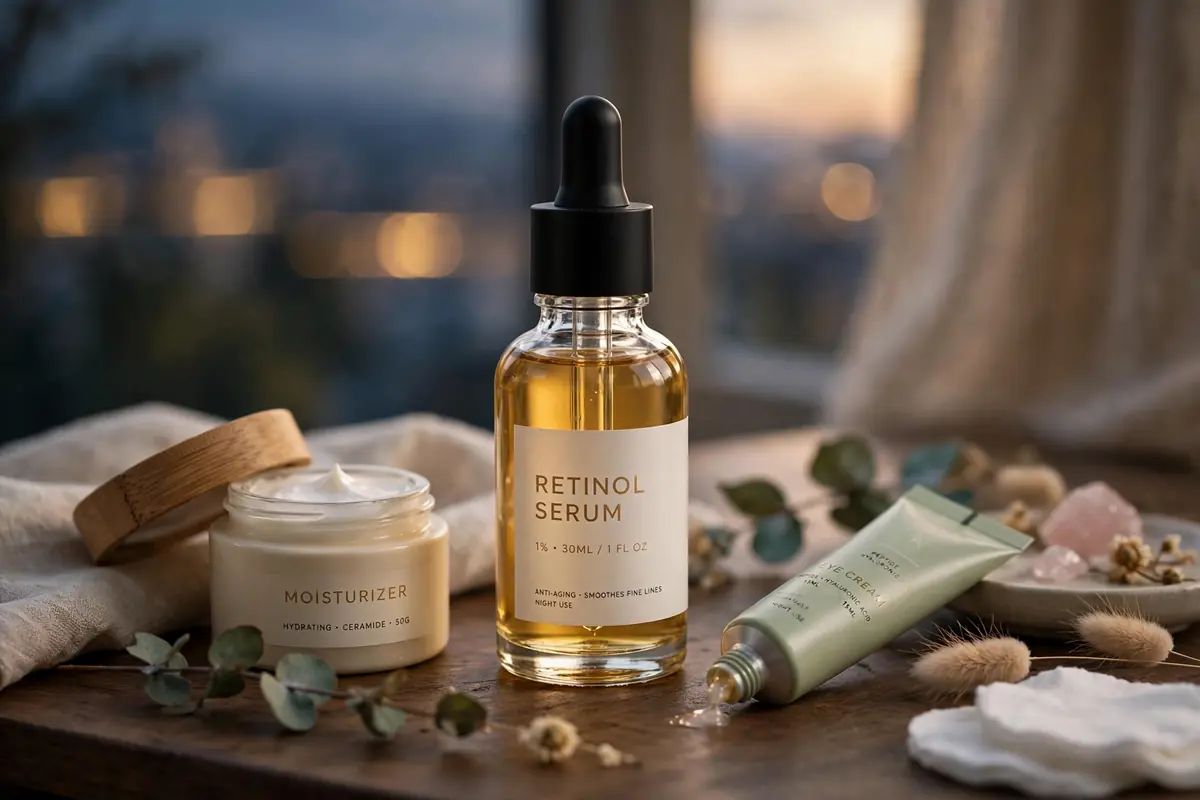
After cleansing, apply your treatment serum — this is the active repair step. For most skin types, a retinol serum is the gold standard for night repair: retinol speeds cell turnover, smooths texture, fades dark spots, and boosts collagen over time. Start with a low strength (0.25–0.3%) 2–3 nights per week, then build up gradually as your skin tolerates it.
If retinol is too strong for your skin, peptide serums are a gentler alternative — peptides signal skin to produce more collagen and support barrier repair without irritation. Niacinamide (vitamin B3) is another excellent night ingredient: it calms inflammation, strengthens the barrier, and evens skin tone.
Step 3: Moisturizer and Barrier Support
After your serum, seal everything in with a moisturizer suited to your skin type. Night moisturizers can be richer than daytime ones: look for ceramides, which rebuild the skin barrier, and hyaluronic acid, which draws moisture into skin. For dry skin, a cream texture works best; for oily skin, a lightweight gel-cream seals in hydration without heaviness.
This step matters more than most people realize — a strong barrier keeps moisture in and irritants out, and it is the foundation of repair. If your skin feels tight, flaky, or reactive, your barrier needs support: simplify your routine, focus on ceramides and gentle hydration, and pause strong actives until skin calms.

Step 4: Eye Care and Lip Care
The eye area has the thinnest skin on the face and shows fatigue first — fine lines, dark circles, and puffiness. At night, apply a small amount of eye cream with your ring finger (the weakest finger, so it applies the least pressure), tapping gently around the orbital bone. Look for caffeine for puffiness, vitamin K or niacinamide for dark circles, and peptides for fine lines.
Do not forget your lips: they have no oil glands and dry out overnight. Apply a thick lip balm or sleeping lip mask before bed — this prevents chapping and keeps lips soft by morning.
Weekly Overnight Treatments
Once or twice a week, add an overnight treatment for a deeper repair boost. A hydrating overnight mask — applied as the last step instead of (or over) your moisturizer — locks in moisture all night and leaves skin plump by morning. For dull skin, a gentle overnight exfoliating treatment (with lactic acid or PHA) removes dead cells while you sleep, revealing brighter skin.
Use overnight treatments on nights when you skip retinol, to avoid overloading skin with actives. And always patch-test a new overnight product on a small area first — a reaction discovered in the morning is much harder to fix than one caught early.

Night Routine Mistakes to Avoid
The most common night routine mistake is overdoing actives: using retinol, strong acids, and vitamin C all in one night irritates skin and damages the barrier, slowing repair. Keep nights simple — one active serum, a good moisturizer, and consistency beat a complicated routine every time.
Other mistakes: sleeping in makeup (it clogs pores and blocks repair), skipping moisturizer because your skin is oily (oily skin still needs hydration — dehydration triggers more oil), and changing products too often (skin needs 4–6 weeks to show results from a new product).
Wake Up to Better Skin
A night skincare routine for skin repair is simple: double cleanse, apply one treatment serum, seal in moisture with a barrier-supporting cream, care for eyes and lips, and add a weekly overnight treatment. Work with your skin's natural overnight repair cycle, keep it consistent, and avoid overloading actives. Within weeks, you will wake up to smoother, calmer, healthier-looking skin.