How to Style Scarves for Every Season
Scarves are the most versatile accessory in your wardrobe. One beautiful scarf can transform a simple outfit, add color to neutrals, provide warmth in winter, and add polish in summer — all while taking up almost no space. Yet many women own scarves they rarely wear, unsure how to style them beyond draping one around the neck.
This guide shows you how to style scarves for every season, with fabrics, tying methods, and color tips that make scarves your favorite accessory year-round.
Why Scarves Deserve More Attention
Scarves do more than most accessories: they add color, texture, pattern, and warmth in a single piece. A bright scarf livens a black outfit instantly; a silk scarf elevates jeans and a t-shirt to polished; a chunky knit scarf makes a winter coat look intentional rather than merely practical.
Scarves are also forgiving: unlike fitted clothing, they suit every body type and size, and they never go out of style — a quality scarf lasts for decades. The key is choosing the right fabric weight for the season and learning a few tying methods.
Spring: Light Silk and Cotton
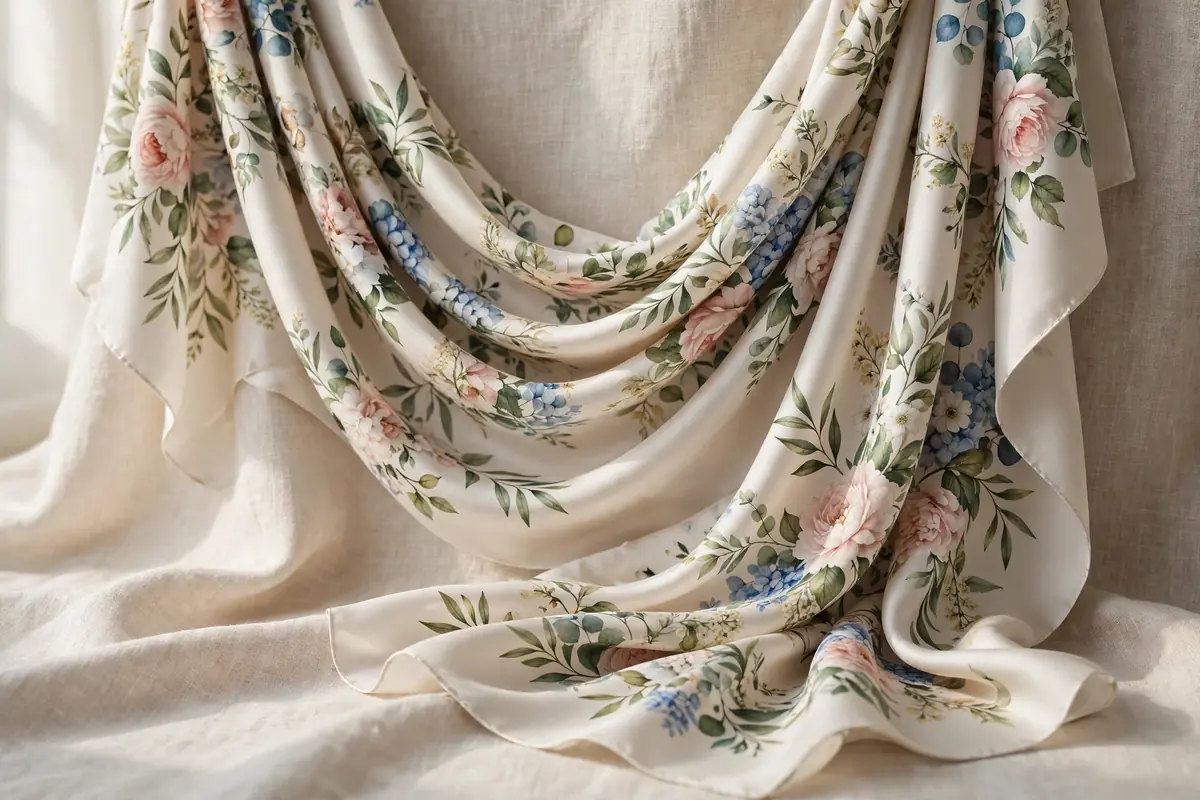
Spring scarves should be light and airy. Silk, chiffon, and lightweight cotton scarves in pastel or floral prints mirror the season's freshness. A silk square, folded into a triangle and tied loosely at the neck, adds polish to a blazer or a simple top without adding warmth.
Spring is the season for color: soft pinks, mint, lavender, and butter yellow all complement spring's palette. Try a light scarf as a hair accessory too — tied around a ponytail or woven into a braid, it adds a playful, feminine touch.
Summer: Sheer and Breezy
Summer scarves are about style, not warmth — sheer fabrics that add elegance without heat. Lightweight cotton, linen, and gauze scarves in bright colors or bold prints work beautifully as neck accessories, head wraps, or even beach cover-ups.
A large, sheer scarf doubles as a sarong or a shawl for air-conditioned restaurants and evening breezes. In summer, choose breathable fabrics and avoid anything heavy or woolly; a silk-cotton blend drapes beautifully without sticking. Bright colors — coral, turquoise, white — suit summer's energy, while a classic white scarf pairs with everything from sundresses to denim.
Fall: Chunky Knits and Plaids
Fall is scarf season at its best. Chunky knit scarves, plaid blankets scarves, and wool wraps add warmth and texture to coats and jackets. A large plaid blanket scarf, draped over a coat and belted at the waist, creates a cozy, fashion-forward look that defines fall style.
Fall colors shine in scarves: burgundy, mustard, forest green, camel, and rust all complement autumn's palette. Try the loop method — fold a long scarf in half, drape it around your neck, and pull the ends through the loop — for a snug, polished look that stays put.
Winter: Warmth First, Style Too
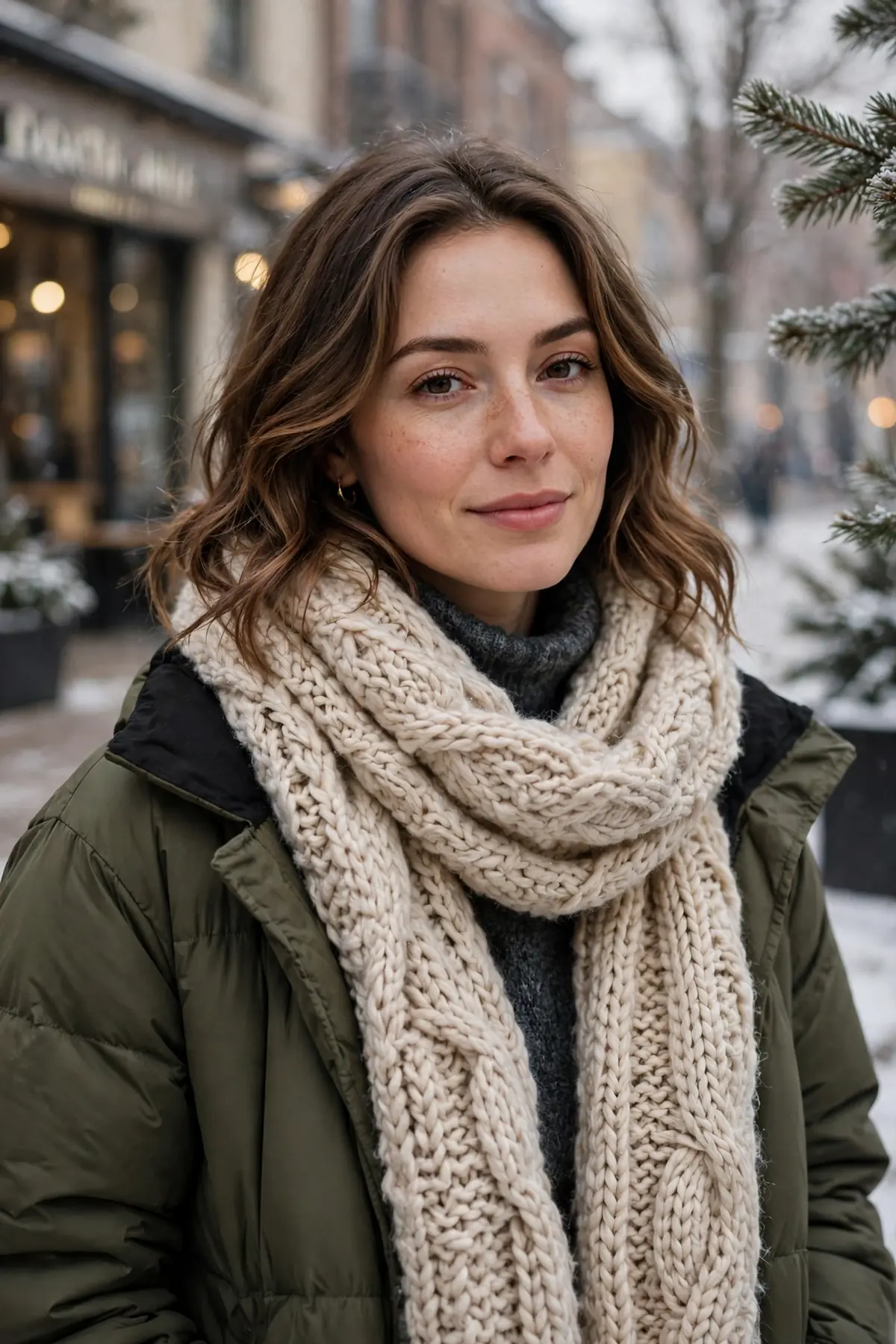
Winter scarves must be warm first — but they can still be stylish. Thick wool, cashmere, and fleece-lined scarves protect against cold while adding elegance. A long, wide cashmere scarf wrapped twice around the neck and tucked into a coat is both the warmest and the chicest winter option.
In winter, choose scarves long and wide enough to wrap generously — short, thin scarves leave your neck exposed and look lost against a heavy coat. Dark, rich colors (black, navy, charcoal, burgundy) suit winter, but a bright scarf against a dark coat adds a welcome pop of color on gray days. Cashmere is worth the investment for winter: it is warmer than wool, softer against skin, and lasts for years with care.
Ways to Tie a Scarf
A few tying methods cover every scarf and season. The classic drape — simply draping a scarf around the neck with ends hanging evenly — suits long scarves and formal looks. The loop (fold in half, pull ends through) is snug and neat for cold weather. The Parisian knot (a variation of the loop with one end pulled through) looks effortlessly chic.
The infinity loop (a circular scarf worn doubled around the neck) is the easiest of all — no tying needed. For silk squares, the triangle fold (fold diagonally, drape with the point forward, tie at the back) is classic and elegant. Practice each method once in front of a mirror, and you will tie scarves confidently without thinking.

Choosing Scarf Colors
Scarf color should complement your wardrobe, not fight it. If your wardrobe is mostly neutrals (black, gray, navy, camel), scarves are your chance for color — bright reds, jewel tones, and bold prints pop beautifully against neutrals. If your wardrobe is already colorful, choose scarves in complementary neutrals or subtle patterns.
Match scarf colors to your skin tone too: warm skin tones glow in golds, oranges, and warm reds; cool skin tones suit blues, purples, and cool pinks.
Your Year-Round Accessory
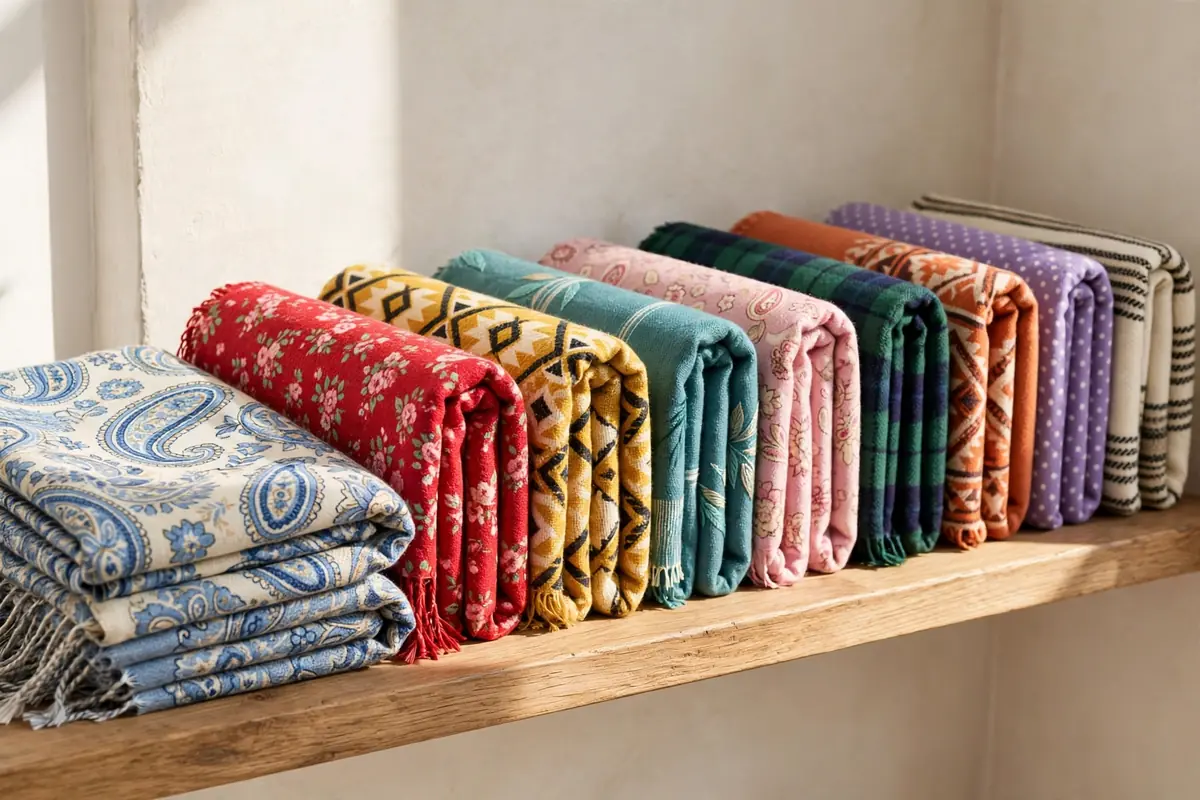
Scarves truly work every season: light silk for spring, sheer cotton for summer, chunky knits and plaids for fall, and warm cashmere for winter. Learn a few tying methods, choose colors that complement your wardrobe and skin, and match fabric weight to the weather. With a small collection of well-chosen scarves, you can refresh any outfit, add polish to casual looks, and stay warm in style — all year round, from a single accessory drawer.