How to Exfoliate Your Skin Safely at Home
Exfoliation is the secret to smooth, radiant skin: it removes dead skin cells that dull your complexion, unclogs pores, and helps your other skincare products absorb better. But exfoliate wrong — too often, too harshly, or with the wrong product — and you get redness, irritation, and breakouts instead of glow.
This guide shows you how to exfoliate your skin safely at home, with the right method for your skin type and a routine that delivers smoothness without damage.
Why Exfoliation Matters
Your skin naturally sheds dead cells, but the process slows with age, sun damage, and dry weather — leaving a buildup that makes skin look dull, rough, and tired. Exfoliation removes that buildup, revealing the fresher skin underneath and instantly improving texture and brightness.
Regular, gentle exfoliation also prevents clogged pores (a major cause of blackheads and acne), smooths fine lines' appearance, and helps serums and moisturizers penetrate deeper instead of sitting on dead skin.
Physical vs Chemical Exfoliants
There are two types of exfoliants, and choosing the right one matters. Physical exfoliants use texture — scrubs with fine particles, brushes, or cloths — to manually buff away dead skin. They give instant smoothness but can be harsh: coarse scrubs can create micro-tears, especially on sensitive or acne-prone skin.
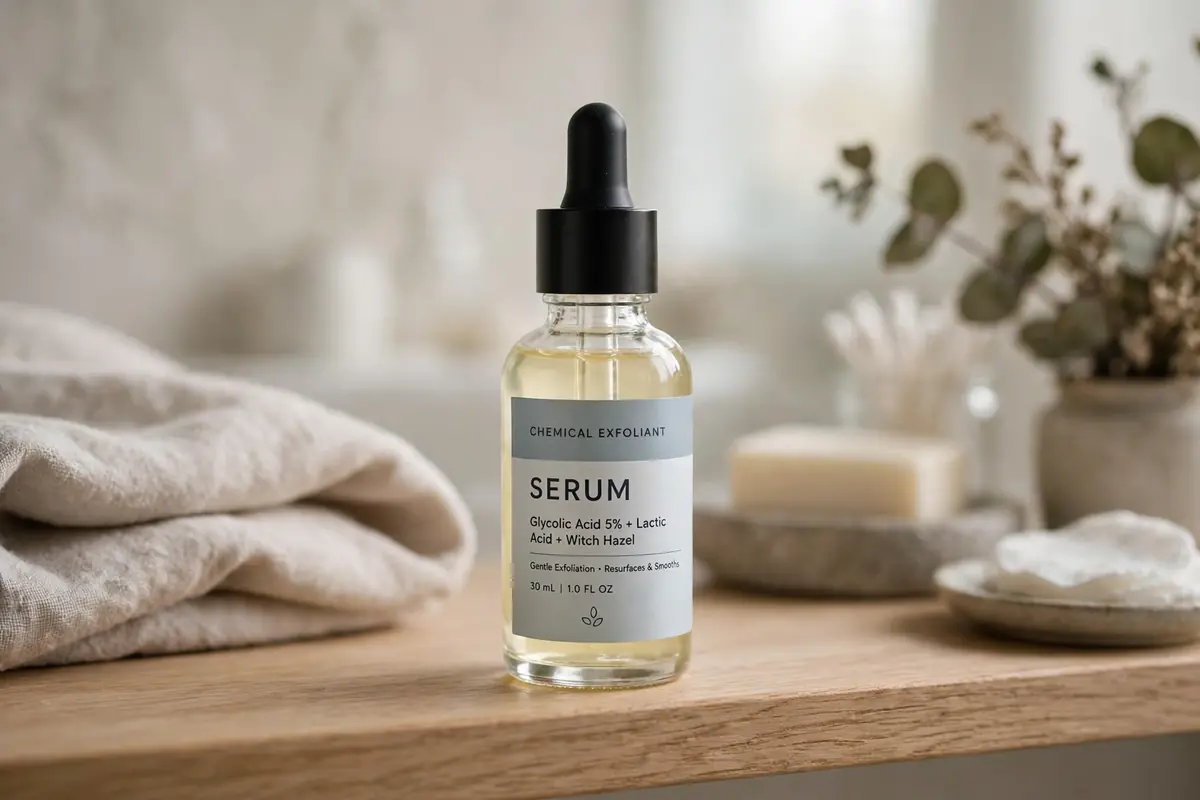
Chemical exfoliants use acids to dissolve dead cells without scrubbing. AHAs (like glycolic and lactic acid) work on the surface for brightness and are great for dry or sun-damaged skin; BHAs (salicylic acid) penetrate pores, making them ideal for oily and acne-prone skin. For most people, a gentle chemical exfoliant is safer and more even than a physical scrub — no friction, no micro-tears, just smooth results.

How Often Should You Exfoliate
Frequency depends on your skin type and the product's strength. Most people do well exfoliating 1–3 times per week: oily and combination skin can handle 2–3 times, while dry and sensitive skin should stick to once a week. Stronger chemical peels (higher acid percentages) should be used even less often — once a week at most.
Start slowly: exfoliate once a week for the first two weeks and watch your skin's reaction. If there is no redness or irritation, increase gradually. Over-exfoliation signs — persistent redness, tightness, peeling, stinging when applying other products, or sudden breakouts — mean you need to stop for a week and let your skin recover before resuming at a lower frequency.
Step-by-Step Exfoliation Routine
Exfoliate in the evening, after cleansing, when your skin has time to recover overnight. Start with a clean, damp face and apply your exfoliant: for a scrub, massage gently in small circles for 30 seconds (never press hard); for a chemical exfoliant, smooth a thin layer over your face with your fingers or a cotton pad and let it sit — do not rinse unless the product says to.
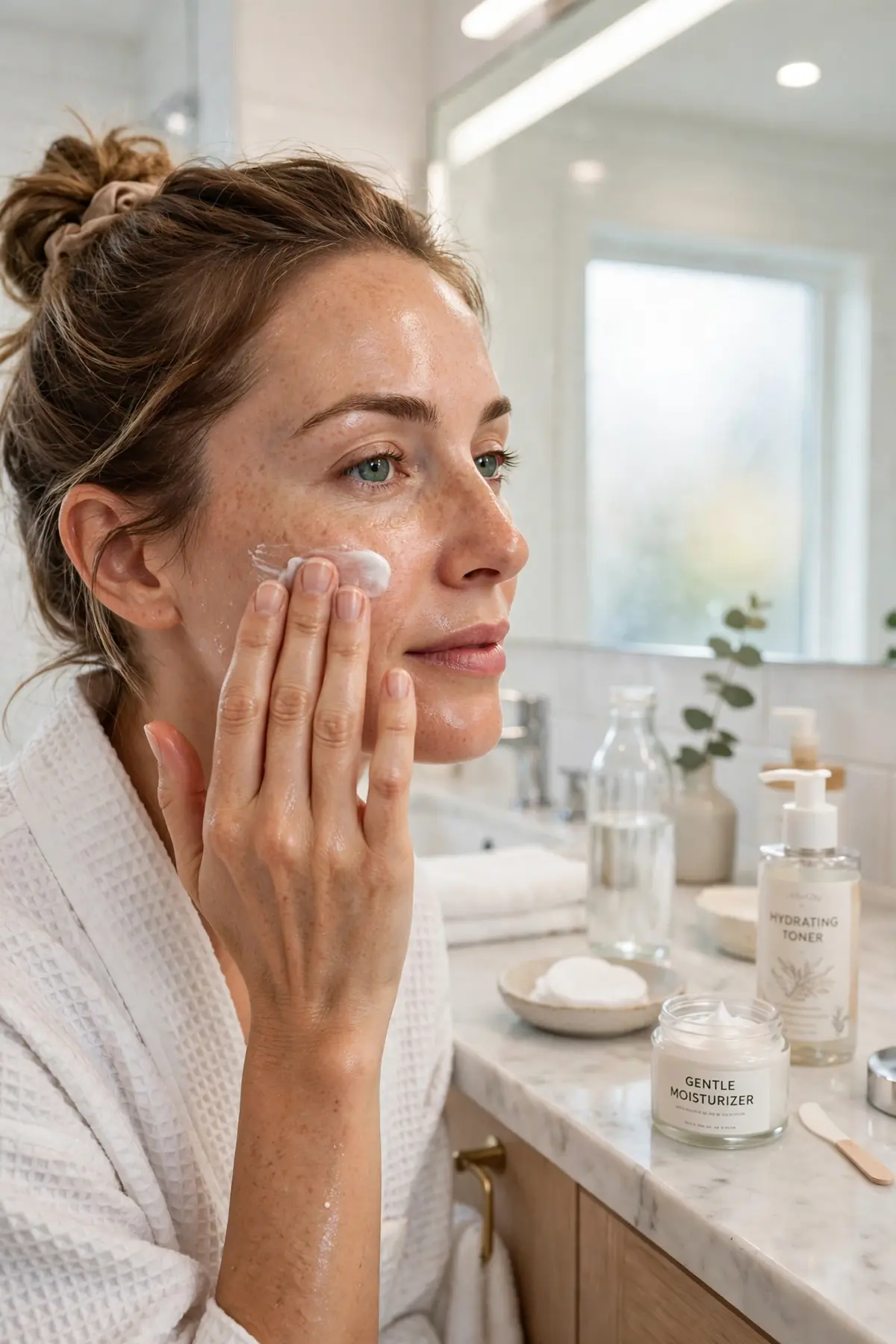
Follow immediately with a hydrating serum or a gentle moisturizer to soothe and protect the freshly exfoliated skin. Skip other strong actives (retinol, vitamin C, other acids) on exfoliation nights to avoid irritation. In the morning after exfoliating, sunscreen is essential — freshly exfoliated skin is more sun-sensitive, and sun protection preserves your results.
Exfoliation for Sensitive Skin
Sensitive skin can still exfoliate — it just needs a gentler approach. Choose mild chemical exfoliants like lactic acid or PHA (polyhydroxy acids), which are larger molecules that work more slowly and gently than glycolic acid. Avoid physical scrubs with coarse particles, and skip exfoliating tools like harsh brushes entirely.
Patch-test first: apply a small amount behind your ear or on your jawline and wait 24 hours before using it on your full face. Exfoliate only once a week, and always follow with a calming, fragrance-free moisturizer. If your skin stings, turns red, or feels tight for more than a few minutes after exfoliating, the product is too strong — switch to a milder formula or reduce frequency.

Aftercare: Protect Your New Skin
Aftercare determines whether exfoliation helps or harms. Always moisturize after exfoliating — fresh skin loses moisture faster, and a good moisturizer seals in hydration and calms any mild irritation. Use gentle, fragrance-free products for 24 hours after exfoliating; avoid harsh cleansers, strong actives, and hot water, which can aggravate freshly exfoliated skin.
Sunscreen is non-negotiable after exfoliation: use SPF 30 or higher every morning, and reapply if you are outdoors. Without sun protection, exfoliation's brightening benefits reverse quickly as sun damage creates new dullness and dark spots.
Mistakes to Avoid
The biggest exfoliation mistake is overdoing it — daily exfoliation, or combining a scrub with a chemical peel, strips the skin barrier and causes lasting irritation. Another mistake is exfoliating broken, sunburned, or irritated skin — wait until it heals fully. Using a body scrub on your face is also a mistake: body scrubs are far too coarse for delicate facial skin.
And finally, mixing too many actives on exfoliation night (retinol + acids + vitamin C together) overwhelms skin — keep exfoliation nights simple: cleanse, exfoliate, moisturize, done.
Smooth Skin, Safely
Exfoliating safely at home comes down to a few rules: choose a gentle method suited to your skin type, start once a week and build up slowly, exfoliate in the evening, moisturize and protect with sunscreen after, and never exfoliate irritated skin. Follow these rules, and exfoliation becomes your shortcut to smoother, brighter, healthier-looking skin — without the redness and damage of doing it wrong.